

A worker scans their badge at the lobby turnstile and the HR system marks them present for the day. That still doesn't mean they actually made it to the loading dock on time.
In large facilities, attendance tracking falls apart the second someone walks past the entrance. Manual logs and biometric scanners only capture entry. Because they only measure door access, operations teams end up dealing with delays that never appear on the official shift report. Managers usually only find out a zone is understaffed when a line slows down, a machine sits idle, or a dispatch window is missed.
Those quiet fifteen-minute gaps compound across hundreds of employees every week, creating massive invisible payroll waste.
Why Cameras Don't Fix the Blind Spot ?
When the attendance numbers look fine but the floor is behind schedule, managers naturally check the security footage.
Standard CCTV records the floor, but nobody has time to constantly monitor it. Security feeds are built for post-incident investigations, not active workforce tracking. Cameras won't automatically flag who reported late, left early, or skipped an assigned zone. Most facilities only review footage after something has already gone wrong.
You cannot pay a floor supervisor to sit in a control room and scrub through eight hours of raw video just to settle a break-time dispute or verify an early exit. By the time someone actually pulls the tape, the operational damage is already done.
Tracking Presence Across Designated Zones
That’s why operations teams are moving beyond front-door scanners.
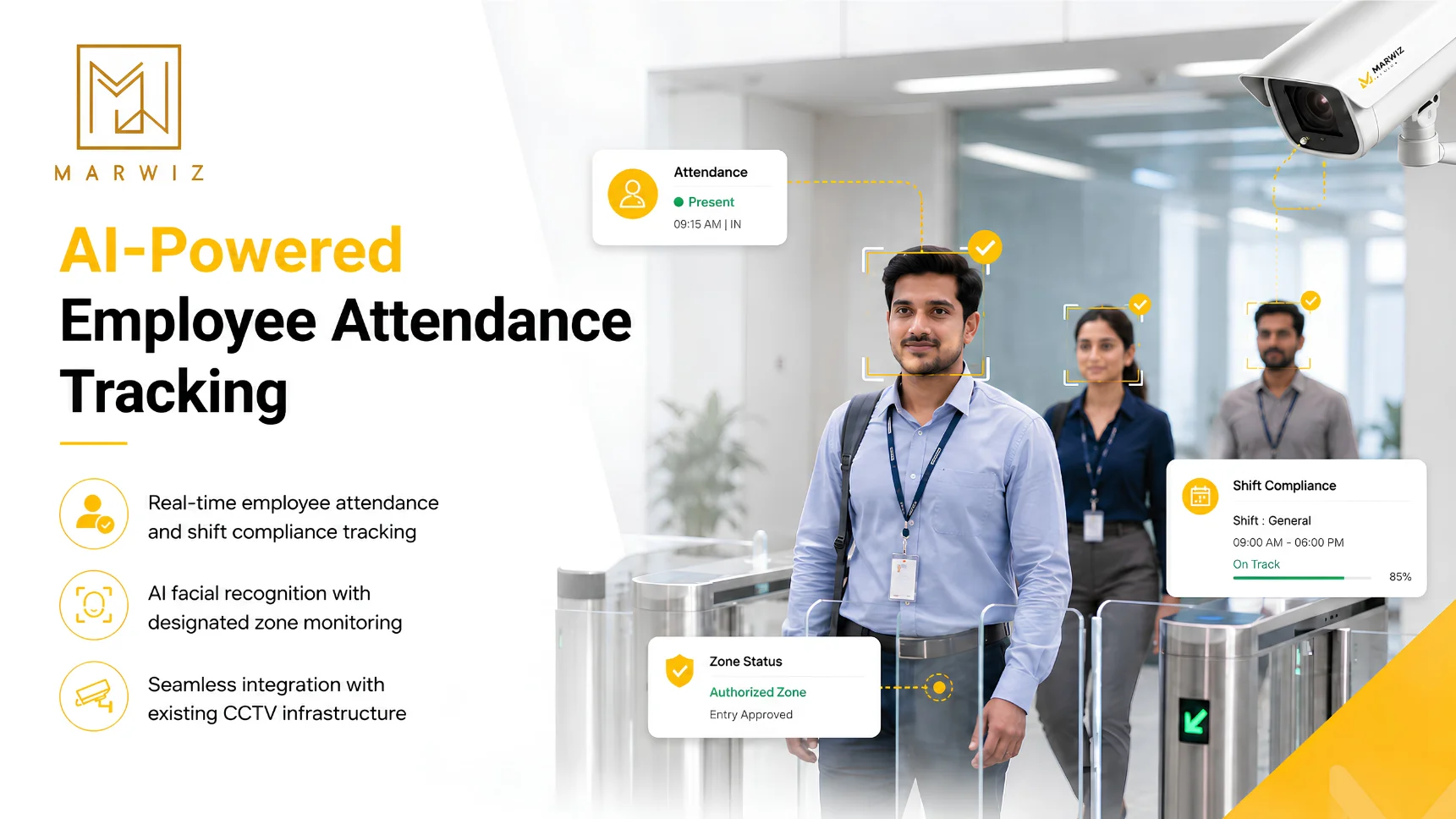
Marwiz Vision’s Employee Attendance Tracking Detection uses AI facial recognition and behavior analytics to identify staff directly on the floor. It tracks where people report during a shift and flags attendance gaps as they happen.
The system logs precise entry and exit times for specific zones, catching absenteeism immediately. Supervisors get the attendance data they need without having to physically track people down across the facility. Best of all, it works without forcing employees into new physical check-in queues. It works through the camera system the facility already uses.
Where Zone Tracking Matters Most ?
Knowing who is actually in their assigned area changes how different sites run:
-
 Factories & Plants:
Keeps production on schedule by monitoring active shift rotations
and preventing line downtime.
Factories & Plants:
Keeps production on schedule by monitoring active shift rotations
and preventing line downtime.
-
Warehouses:
Lets dispatch teams track on-ground staff during heavy loading cycles
when headcount matters most.
-
Corporate Offices:
Automates daily attendance and zone access for more accurate workforce management.
-
Hospitals:
Verifies that critical staff are physically present in assigned wards
for continuous care operations.
-
Construction Sites:
Directly improves worker safety by tracking strict shift adherence
in high-risk restricted areas.
Changes Once Tracking Is Automated
Once attendance tracking becomes automated, supervisors spend less time fixing attendance issues manually. Instead of checking logs or resolving payroll disputes, teams get alerts for absenteeism or early exits as they happen, while verified attendance data syncs directly with existing HR and payroll systems.
This means payroll teams process verified attendance inside designated work zones, rather than assumed time based on a lobby badge swipe.
Most facilities already have the cameras in place. The bigger problem is verifying whether attendance records match what is actually happening on the floor.
Relying on an entry scanner leaves too much room for proxy attendance and mid-shift wandering. If that gap is becoming harder to manage, our team can help you evaluate the current setup and turn your existing hardware into an accurate shift verification tool.
Ready to get started?
Are you exploring your digital signage project needs (software and content)? Looking for just the digital signage display software or a full-scope proposal? Interested in a custom software solution tailored to your specific requirements? Would you like a personalized software demo?